Monday, March 09, 2009
EyeBorg
In the "Smart Prosthetics" department we have the Eyeborg, a digital camera embedding into a human eye socket. From the Singularity Hub.
Labels: innovation, smart prosthetics

Saturday, February 14, 2009
TED 2009 Photos
For later use:
Standard Biological Parts
- Steelcase Walkstation
- TED Prize Winners
- My Flickr Set
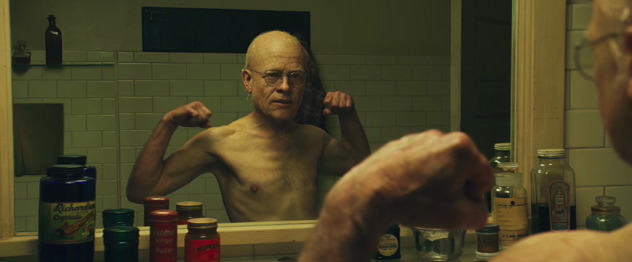
- Benjamin Button
- Poster Wall
- Aptera
- Regina Specktor
- Electric Motorcycle
- Eric Lewis
- Grandpa Brad Pitt
- Aimee Mullins
- PW Singer
- Bonnie Bassler
Standard Biological Parts
Labels: innovation, Long Beach, TED2009
Friday, February 13, 2009
TED Videos
Just aggregating some TED2009 videos for later use:
- TED 2009 Conference Titles
- TED Prize
- Robin w/Einstein
- SixthSense Wearable Computer
- TED 2009 Balloon Eulogy
- Bill Gates Mosquito Launch
- Aptera Test Drive
Labels: innovation, Long Beach, TED2009
Wednesday, February 11, 2009
TED Overview

Thursday, November 08, 2007
Don't let the Bozos Grind you Down
Guy Kawasaki, in a talk to O'Reilly's 2007 MySQL Confernece, entitled The Art of Innovation, lists 9 rules of Innovation.
- Jump to the next curve.
- Don't worry, be crappy.
- Churn, baby, churn.
- Don't be afraid to polarize people.
- Break down the barriers.
- “Let a hundred flowers blossom.”
- Think digital, act analog.
- Never ask people to do what you wouldn't do.
- Don't let the bozos grind you down.
Labels: guy, innovation, kawasaki
Mapping Life
Juan Enriques in his 13 October SALT talk (summary, mp3) made an interesting comparison between agriculture and energy. It used to be that in agriculture we threw bigger machines (tractors, combines, etc.) and chemicals (pesticides, fertilizers) at the little plant. Then in the 1960's we changed the plant itself -- the green revolution. By changing the plant itself, we solved the food problem we could never solve by throwing more machines and chemical at the plant.
Now consider hydrocarbon fuels (coal, oil). We are currently throwing more machines at them (digging deeper, oil extraction from shale, etc.). But what if we could change the coal itself? Could we make a bacteria that eats coal or oil and excretes natural gas? Just let them loose in a coal mine or oil shale and harvest the natural gas. Or could we genetically engineer the bacteria in the ocean that absorb carbon out of the air to also absorb hydrogen out of the water and produce hydrocarbons for us? We could build power generation plants that run off of air and water and a domesticated bacteria.
Now consider hydrocarbon fuels (coal, oil). We are currently throwing more machines at them (digging deeper, oil extraction from shale, etc.). But what if we could change the coal itself? Could we make a bacteria that eats coal or oil and excretes natural gas? Just let them loose in a coal mine or oil shale and harvest the natural gas. Or could we genetically engineer the bacteria in the ocean that absorb carbon out of the air to also absorb hydrogen out of the water and produce hydrocarbons for us? We could build power generation plants that run off of air and water and a domesticated bacteria.
Labels: Enriques, innovation, Juan, SALT
Wednesday, September 19, 2007
Transformation
I just discovered a good short summary of transformation theory by Marcia Daszko and Sheila Sheinberg. Here is a snippet. (scroll down . . .)
| THREE TYPES OF CHANGES | |||
| Traditional | Transitional | Transformational | |
| Motivation for Change | Better, Faster, Cheaper | Fix a problem | Survival,Environment,World Changes, Breakthrough needed |
| Degree of Change | Incremental improvements | Transition from old to new; A to B | Revolutionary |
| Necessary Thinking | Improve | Change management; strategic planning | Radical shifts in mindset/thinking/actions |
| Actions | Manage and control processes | Design the plan; implement the plan | Whole system change, complete overhaul of mindset, paradigms, culture |
Labels: innovation, transformation
Wednesday, June 20, 2007
Innovation in the White Spaces
My friend Gwen pointed me to an interesting piece on innovation from EDS. It cites Charlie Feld on the importance of engaging different disciplines, as well as creating an infrastructure that is innovation friendly.
Labels: Charlie, EDS, Feld, infrastructure, innovation
Monday, June 18, 2007
Think Cube
The Innovation Weblog points to an interesting new brainstorming product called Think Cube. Here's the hype:
While I doubt this contains ALL the tools I need to innovate, I would like to try it out on one of the tough problems we are having.
ThinkCube is a complete solution that provides you with all of the tools you need to innovate. It represents the culmination of 10 years of research in creative thinking and synthesizes today's leading creativity tools, techniques, and processes. Whether you use it alone or in a group, ThinkCube trains your brain and lets you exercise your creative muscles.
Our unique ThinkCubation process incorporates many conventional brainstorming techniques and frames innovation in a process that is easy to follow and consistently produces results. ThinkCubation turns the critical but normally passive step of incubation into an active process.
While I doubt this contains ALL the tools I need to innovate, I would like to try it out on one of the tough problems we are having.
Labels: creativity, cube, innovation, thinking
Book Review: Group Genius

The Innovate on Purpose blog has a good review of the book, Group Genius. The review starts:
The path to becoming more innovative often requires debunking a number of myths or commonly held beliefs. For instance, the idea that a lone genius is often responsible for an invention or innovation. In fact, most innovations or inventions spring from the combination of the work of many people. Edison did not create the lightbulb alone, nor did Al Gore invent the internet by himself.
Yet another book based on complexity theory and congruent with Web 2.0.
Labels: collaboration, genius, innovation
Wednesday, June 06, 2007
PMOG not MMORPG
3pointD points to this website:
Just imagine this in the work place. Firefox can just watch what I do, count up my score, and my annual performance review is done -- no mus, no fuss.
PMOG stands for Passively Multiplayer Online Game. It's like a Massively Multiplayer Online Game, except played passively. That means a lot of people just going about their life online. Our actions in our web browser feed moves into a game. That game shows us the characters and situations we create just by surfing the web! . . .The Spring 2007 incarnation of PMOG works using a Firefox extension, a small software add-on you install in your web browser.
Just imagine this in the work place. Firefox can just watch what I do, count up my score, and my annual performance review is done -- no mus, no fuss.
Labels: innovation, MMORPG, pmog
BumpTop at TED
Monday, June 04, 2007
Critique of Brainstorming
The Innovation Weblog cites a critique of Brainstorming. While the critique has some merit, the proffered alternative--two people without a moderator--seems to miss the point of brainstorming all together.
Labels: brainstorming, innovation, insight
Tuesday, May 29, 2007
Divergence in Innovation
My friend, Mark, pointed me to a Shell commercial which illustrates the power of divergent thinking on innovating a solution.
Labels: divergence, innovation, thinking
Pleo - Pet Robot
On Fortune's list of 24 top innovators is Caleb Chung, the creator of the Furby.
His new toy robot is the Pleo. It has 35 sensors, 6 processors, and an ability to learn tricks. See video.
His new toy robot is the Pleo. It has 35 sensors, 6 processors, and an ability to learn tricks. See video.
Labels: AI, design, innovation, robots
Wednesday, May 23, 2007
Two Great Quotes
From Seth Godin:
The riskiest thing you can do now is be safe. --TEDTalk, February 2003From Niccolo Machiavelli
Never was anything great achieved great without danger. --The Prince
Labels: godin, innovation, machiavelli
Monday, May 21, 2007
The Experience Trap
Here is another insightful essay by Clay, which once again demonstrates why he is one of today's best thinkers about the extended IT/business milieu. My summary of his argument is that deep human experience is very beneficial to guide our behavior when the larger environment remains largely unchanged. But when the environment is changing deep human experience is detrimental in guiding our behavior. Clay says:
This reminds me of the premise of Orson Scott Card's scifi novel Ender's Game. The earth was under attack from aliens. No human adult could escape their humaness enough to think like an alien enough to successfully battle the aliens. So they recruited grade-schoolers to think "alien."
IBM learned, from decades of experience, that competitive advantage lay in the hardware; Bill Gates had never had those experiences, and didn’t have to unlearn them. Jerry and David at Yahoo learned, after a few short years, that search was a commodity. Sergey and Larry never knew that. Mark Cuban learned that the infrastructure required for online video made the economics of web video look a lot like TV. That memo was never circulated at YouTube.So this is the trick -- to know when our environment has sufficiently changed, to be able to avoid the experience trap. Clay hints that people with lots of experience, just cannot escape into a novice state of mind. Rather than unlearn the old ways, partner with young folks who have never learned the old ways.
This reminds me of the premise of Orson Scott Card's scifi novel Ender's Game. The earth was under attack from aliens. No human adult could escape their humaness enough to think like an alien enough to successfully battle the aliens. So they recruited grade-schoolers to think "alien."
Labels: experience, innovation, Shirky
Wednesday, May 16, 2007
The Future is about Storage

My friend Janet pointed me to an interesting essay by Charlie Stross about the future over the next tweny years. By 2027, he predicts we will easily be able to video/audio/text record, store, index, and search all of our waking moments, all the time, for as long as we live. This will be good to resolve he said/she said arguments--both in the home and in the courts. Pretty bad for privacy, however.
It would also mean the need for a complete overhaul of our educational system. Why memorize stuff (like times tables, history dates, parts of speech, the periodic table, and the Linnaeus biological classification system) when we can just search it near instantaneously?
Labels: future, infotech, innovation
Monday, May 07, 2007
The Strategy Paradox
Endless Innovation introduces a new book about innovation called The Strategy Paradox: Why committing to success leads to failure (and what to do about it). The thesis (as best I can tell from the reviews) is as follows:
- All of the various worlds that make up the global market place, such as the business world, the consumer world, the financial world, and the technology world, are changing quickly in ways we cannot predict.
- Big corporate strategies, while necessary for achieving corporate success, also assume a long term understanding of the global market place.
- These strategies, therefore, set organizations on paths that are inflexible to the inevitable changes in the global market environment.
- Thus the paradox, that in order to achieve corporate success, corporations--by intentional design--get out of sync with the market.
Labels: innovation, strategy
Thursday, May 03, 2007
Jott This!

The Innovation Weblog suggests using a new service called Jott. Jott is a voice to text service. One calls Jott on the phone and leaves a message. Jott will transcribe the message and email the text and audio to a predefined address.
Labels: innovation, jott

 Feed Burner